RestoreYourSleepToday
Evidence-Based Sleep & Wellness Since 2018
RestoreYourSleepToday
Evidence-Based Sleep & Wellness Since 2018
You are reading: SLEEP HEALTH & BETTER BREATHING › Sleep Apnea Research
SLEEP HEALTH RESEARCH
Over 1 Billion People Have Sleep Apnea, and Most Don't Know It — Here Are the Warning Signs You're Probably Ignoring Every Morning
Sleep researchers have identified a common nighttime habit that silently cuts off your airway — and a simple positional correction that's helping thousands breathe freely again without machines or medication.

By Dr. Michael Torres, Board-Certified Sleep Medicine Specialist
9 min read
By Dr. Michael Torres, Board-Certified Sleep Medicine Specialist
6 min read
Stock: Shutterstock / Unsplash.
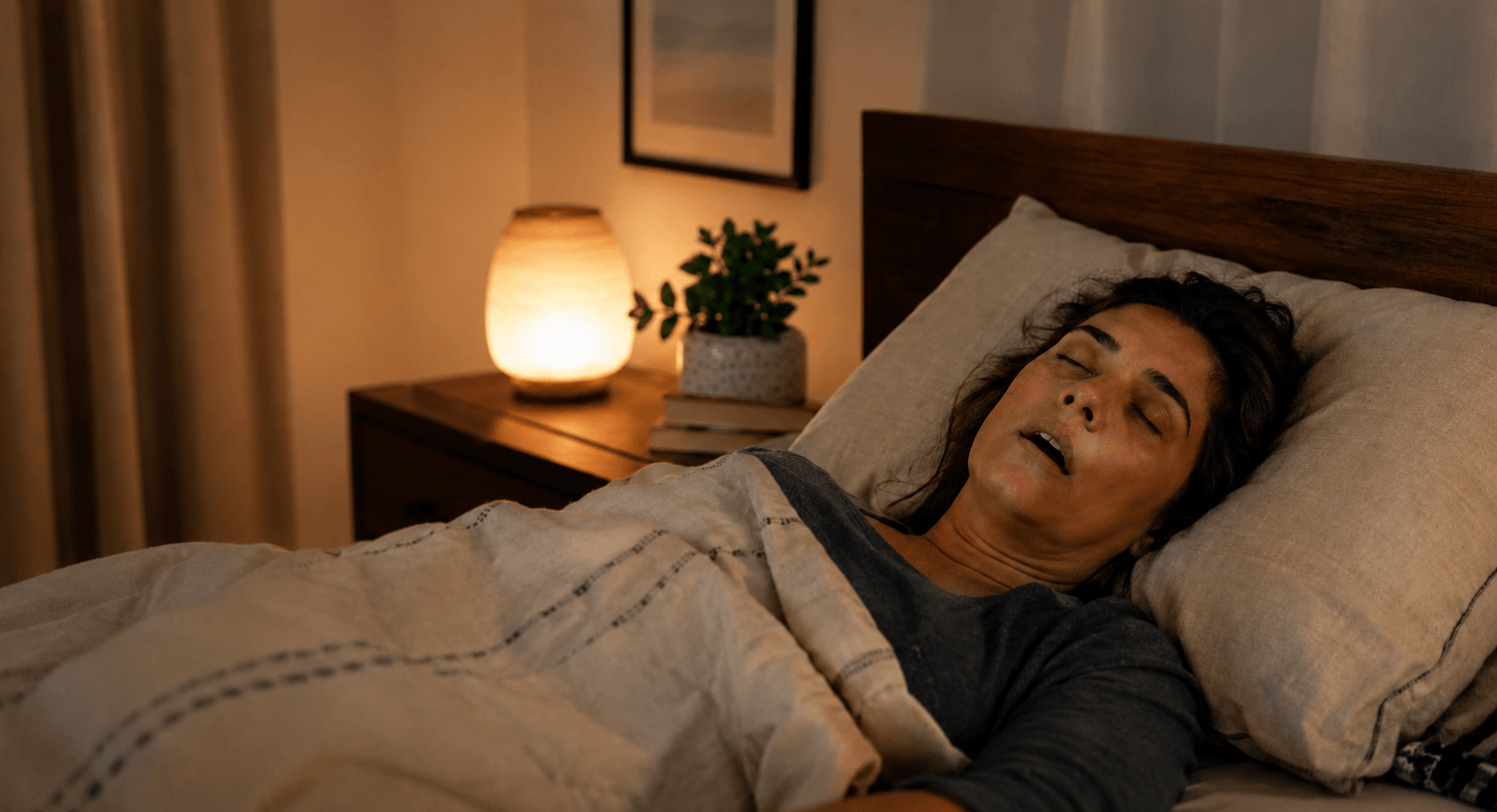
Photo: 39 millions of Americans are affected by Sleep Apnea.
The amount of sleep you're getting may not be the problem. What's happening to your breathing while you sleep might be
You sleep 7, 8, sometimes 9 hours a night.
And yet every single morning, you wake up feeling like you barely slept at all.
Your alarm goes off and the first thing you feel isn't refreshed. It's heavy. Foggy. Like your body is still trying to catch up on something it never quite finished.
Maybe you've gotten used to reaching for coffee before you can function. Maybe you've started canceling plans on weekends because you simply don't have the energy. Maybe people around you have started commenting on how tired you always look — and you don't have a good answer, because you've been getting plenty of sleep.
If this sounds like your life, there's something important you need to know:
More than 1 billion people worldwide
have some form of sleep apnea — a condition in which your airway partially or completely closes during sleep, briefly cutting off your oxygen supply and forcing your brain to partially wake up to restore breathing.
Most of them have no idea.
Not because the condition is rare or obscure. But because its most obvious symptoms happen while you're unconscious — and by the time you wake up, all you notice is that you're inexplicably exhausted, again.
⚡ Still waking up exhausted because of sleep apnea? Discover the sleep solution helping thousands breathe better and sleep deeper — check current availability below.
Here's what makes sleep apnea particularly dangerous: it's not just about feeling tired
Every time your airway closes during sleep — even for just a few seconds — your blood oxygen levels drop. Your brain detects the drop and triggers a partial awakening to restore breathing.
This happens so briefly that you rarely remember it. But it can happen dozens, even hundreds of times per night.
The cumulative effect on your body is significant:
On your heart: Your body responds to each oxygen drop with a stress response — a surge of adrenaline that spikes your blood pressure. Night after night, this puts enormous strain on your cardiovascular system. Research shows that untreated sleep apnea significantly increases the risk of high blood pressure, irregular heart rhythms, and stroke.
On your brain: Chronic oxygen deprivation during sleep impairs memory consolidation, reduces cognitive function, and accelerates mental fatigue. Many people with undiagnosed sleep apnea describe a persistent "brain fog" that no amount of coffee seems to cut through.
On your immune system: Deep sleep is when your body produces the cytokines and immune cells it needs to fight infection and repair tissue. When sleep apnea fragments that deep sleep, your immune response weakens — and you get sick more often, recover more slowly, and feel run-down even when nothing is technically wrong.
On your mood: The link between sleep apnea and depression is well-documented. Chronic sleep deprivation caused by undetected breathing interruptions can create symptoms of anxiety, irritability, and low mood that are often misattributed to stress or life circumstances.
The most unsettling part? Many people live with this for years — sometimes decades — before anyone connects their fatigue, their mood, their cardiovascular symptoms, or their cognitive decline to what's happening in their airway at night.
Because most sleep apnea episodes happen without the person waking up, the condition is usually identified through its daytime and morning symptoms.
Take a moment to consider how many of these apply to you:
Because most sleep apnea episodes happen without the person waking up, the condition is usually identified through its daytime and morning symptoms. Take a moment to consider how many of these apply to you:
Stock: Shutterstock / Unsplash.
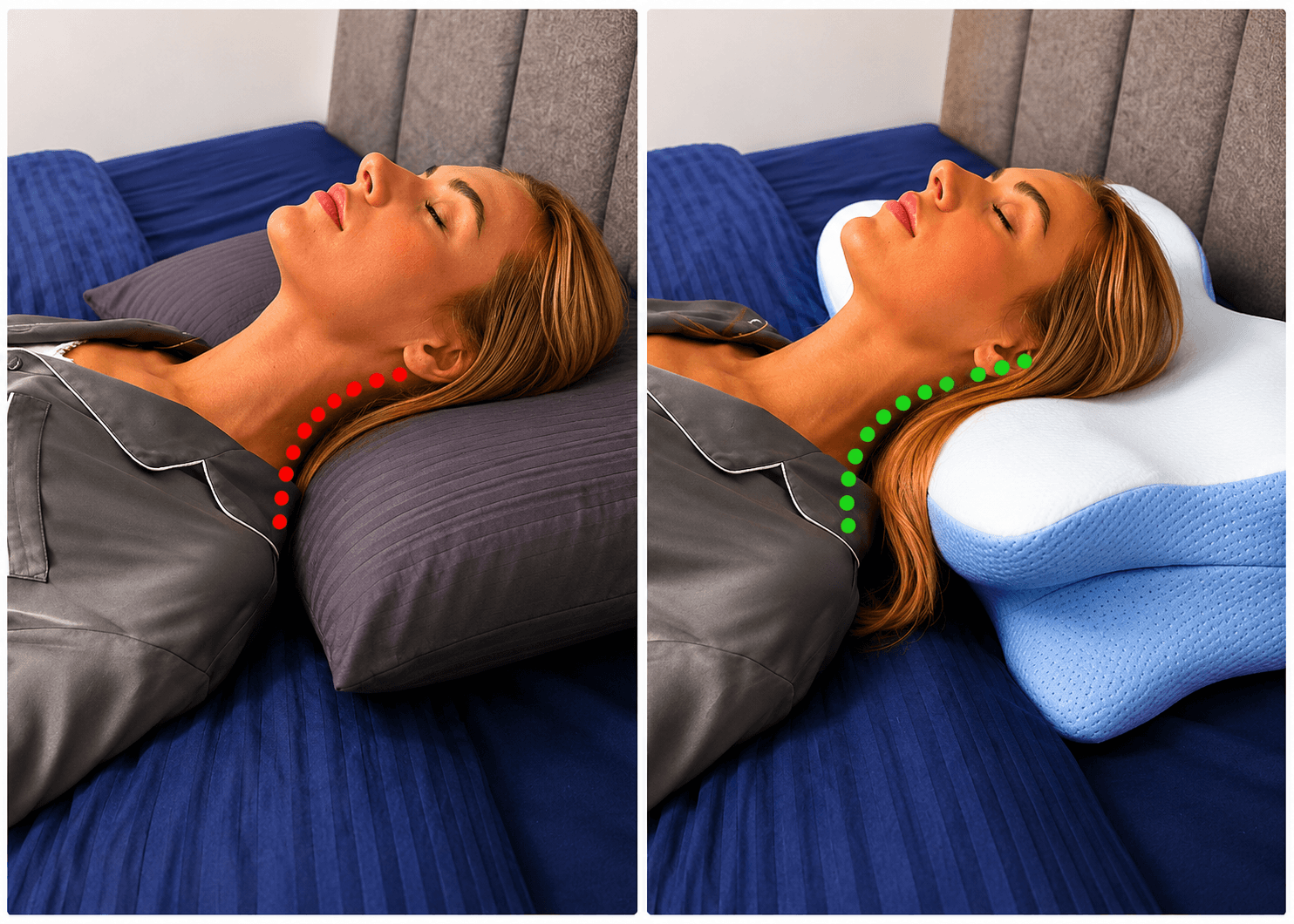
Fig. 1 — Cervical alignment: standard pillow vs. ergonomic contoured support.
Morning symptoms:
• Waking up with a headache, especially at the back of your skull
• Dry mouth or sore throat when you first wake up
• Feeling unrefreshed even after a full night of sleep
• Difficulty waking up or extreme grogginess in the first 30–60 minutes
Daytime symptoms:
• Unexplained fatigue that coffee doesn't fully relieve
• Difficulty concentrating or remembering things
• Irritability, mood swings, or low motivation
• Falling asleep easily during the day — in front of the TV, in a car as a passenger, during quiet moments
Nighttime symptoms (often reported by partners):
• Loud or frequent snoring
• Gasping, choking, or snorting sounds during sleep
• Pauses in breathing that the partner observes
• Restless sleep, frequent repositioning, or waking up with tangled sheets
If you recognized three or more of these symptoms, it's worth taking a closer look at what's happening while you sleep — because the chances that your breathing is being disrupted are significant.
There are several types of sleep apnea, but the most common by far — accounting for the vast majority of cases — is obstructive sleep apnea, which has a clear and identifiable mechanical cause.
When you lie down to sleep, gravity affects the position of everything in your head and neck. The soft tissues at the back of your throat — the soft palate, the uvula, and especially the base of the tongue — naturally relax and become heavier.
In a neutral head position, these tissues stay out of the airway. The passage remains open and breathing continues normally.
But when your head tilts even slightly out of alignment — which happens constantly with standard pillows as you shift positions during the night — those soft tissues fall backward and begin to narrow or block the airway.

"Most people who struggle with sleep apnea don’t realize the issue often has less to do with snoring itself — and more to do with restricted airflow and repeated breathing interruptions during sleep. By the time they come to me, they’ve already tried nasal strips, mouth tape, special pillows, and nearly every ‘snoring solution’ they could find online."
— Dr. Daniel Carter, Board-Certified Sleep Health Specialist
This is why sleep position is one of the most powerful factors in obstructive sleep apnea
Research consistently shows that positional sleep apnea — where breathing disruptions are significantly worse in certain positions, particularly on the back with the head dropped — responds dramatically to positional correction.
In simple terms: keep your head and neck properly aligned throughout the night, and your airway stays open.
The challenge is that virtually no standard pillow — including most marketed as "ergonomic" or "orthopedic" — is actually designed to maintain that neutral head-neck alignment as you move through different sleep positions over the course of the night.
Most pillows compress and shift under the weight of your head. They start at one height when you fall asleep and are effectively different by 2am. The support they provide in Position A is gone when you roll to Position B.
This means your airway opens and closes repeatedly throughout the night — not because of your anatomy, but because your pillow isn't doing its job.
If you've looked into sleep apnea before, you've probably encountered the standard medical recommendation: a CPAP machine.
And if that recommendation made you immediately want to close the browser tab — you're not alone.
CPAP therapy is highly effective for severe sleep apnea. But it comes with real challenges: the mask, the noise, the hose, the pressure that some users describe as suffocating, the difficulty sleeping with a partner while wearing it, the cleaning and maintenance, the cost.
Studies show that nearly half of people prescribed CPAP therapy abandon it within the first year. Not because they don't want to get better — but because the treatment itself makes sleep feel impossible.
For people with mild to moderate sleep apnea, or with significant positional components to their condition, there's a growing body of evidence supporting positional interventions as a first-line approach — one that addresses the mechanical root cause without any device, mask, or machine.
That's the area where proper cervical alignment has shown some of its most promising results.
What sleep researchers and physical therapists have found is that properly maintaining neutral head-neck alignment during sleep creates the conditions for the airway to stay open naturally — without any external intervention.
A properly engineered cervical support system accomplishes this through several specific design features:
A contoured central cradle that holds the head in neutral alignment — neither tilted back (which drops the tongue into the airway) nor pushed forward (which creates a different form of obstruction)
Graduated side support zones that adjust automatically as you shift between back sleeping and side sleeping, maintaining proper head height in both positions — because most positional apnea worsens dramatically when the support changes as you roll over
A shoulder arch release area that prevents the forward shoulder collapse that pulls the neck out of alignment and narrows the throat from the outside in
High-density memory foam with shape retention — meaning the support is identical at 2am as it was when you first lay down, which is critical for maintaining airway patency throughout the entire sleep cycle
For people with positional or mild to moderate obstructive sleep apnea, this kind of structural support can meaningfully reduce the frequency and severity of breathing disruptions — leading to more restful, more oxygenated, more restorative sleep.
Important note: If you suspect you have severe sleep apnea, please consult with a physician. This is not a replacement for medical evaluation. However, if your symptoms are mild to moderate, or if positional factors are involved, addressing your sleep position may be one of the most impactful changes you can make.
What Users Are Saying
"I was diagnosed with mild sleep apnea about two years ago. My doctor recommended a CPAP machine, but I honestly couldn't tolerate sleeping with that mask on my face. I gave up after a few weeks and went right back to waking up exhausted every morning. Later I learned that my sleeping posture and neck alignment might be making my breathing worse at night. I've been using this pillow for about three months now and the difference is incredible. I wake up feeling far more rested, my snoring has reduced a lot, and I finally feel like I'm getting real sleep again."
★★★★★ -- Susan T., 53, Michigan
"For years I thought my constant exhaustion was just stress or getting older. I was sleeping full nights and still waking up drained, foggy, and tired all day long. After doing a sleep evaluation, I found out I had moderate sleep apnea with strong positional factors involved. I wasn't ready for aggressive treatments yet, so I tried improving my sleeping posture first. About six weeks after switching to this pillow, I started sleeping deeper, waking up with more energy, and feeling significantly more rested throughout the day."
★★★★★ -- Karen W., 36, Tennessee
"I never had an official diagnosis, but I had every symptom — headaches in the morning, brain fog, constant fatigue, and waking up feeling like I barely slept. Sometimes I'd even wake up suddenly gasping for air. It honestly scared me. I wasn't ready to go through a full sleep study yet, so I tried this pillow first after reading about sleep posture and airway alignment. Within two weeks, the headaches were almost gone, I stopped waking up constantly during the night, and for the first time in years I actually feel rested in the mornings."
★★★★★ -- Mark D., 44, Colorado
What Actually Works
If you recognized yourself in any of the symptoms above — the morning exhaustion, the headaches, the brain fog, the partner who notices your breathing — you already know this isn't something to keep ignoring.
The good news is that for a significant portion of people with positional or mild to moderate sleep apnea, addressing how their head and neck are supported during sleep produces real, measurable results — without machines, medication, or invasive procedures.
The product that's been generating the most consistent feedback in this space is Derila Ergo — a contoured cervical support pillow specifically engineered to maintain proper airway alignment through every sleep position, throughout the entire night.
It's currently available at 70% off, with free shipping and a full 60-night money-back guarantee.
Sixty nights is enough time to know whether your sleep quality, your energy levels, and your morning symptoms are genuinely improving. If they're not, you return it — no questions asked.
Given what chronic sleep apnea does to your heart, your brain, and your quality of life over years of accumulation, two months to find out if this is the piece you've been missing is more than reasonable.
Maintains the natural curve of your cervical spine in both side and back sleeping positions
Releases tension from shoulder muscles by providing targeted support at the shoulder arch
Keeps your airways open and properly aligned, reducing snoring and improving overnight oxygen recovery
Prevents the "sinking" effect — high-density foam holds its shape through thousands of hours of use
The Specific Pillow Getting Attention From Sleep Specialists
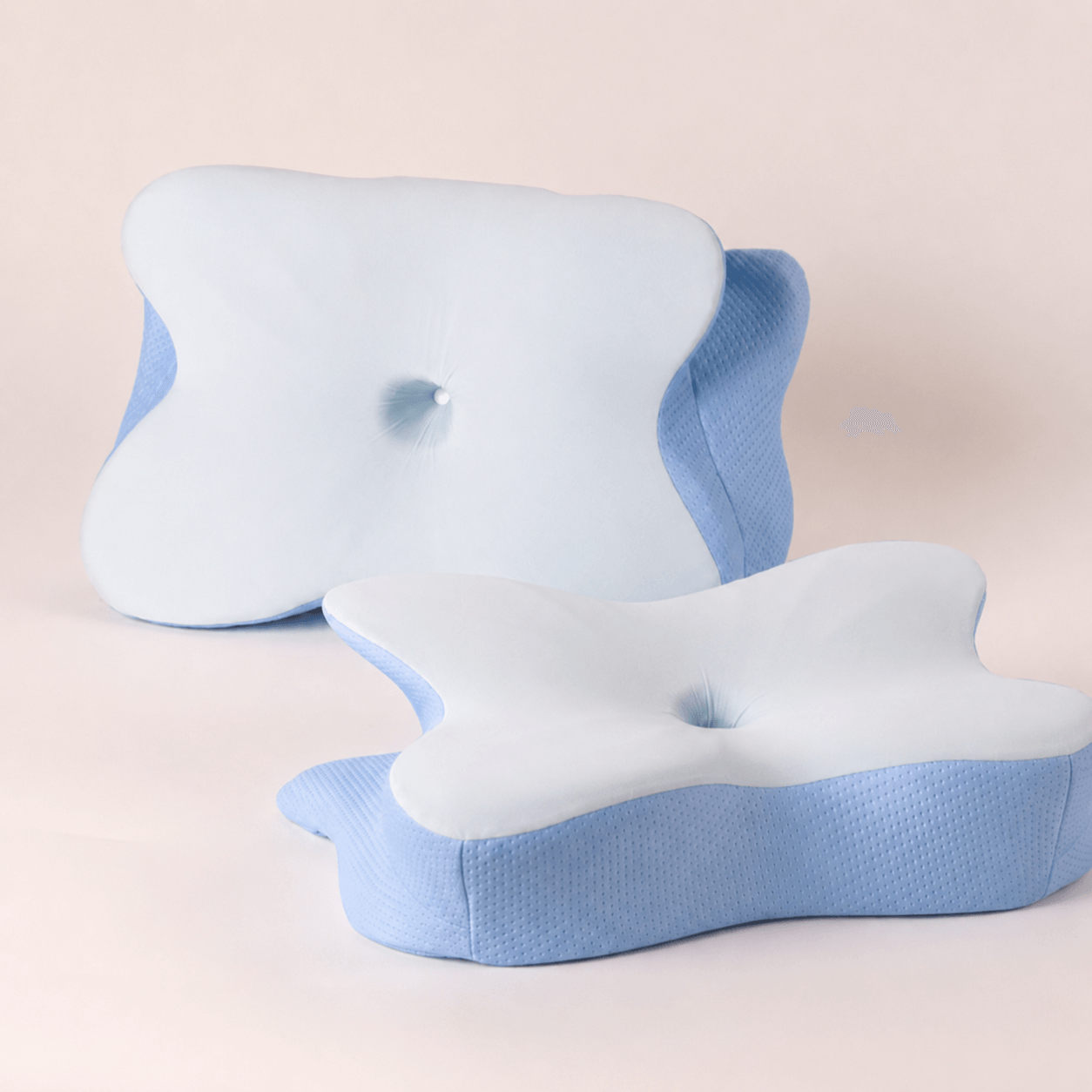
Derila Ergo Memory Foam Pillow
Ergonomic Design
High-Density Foam
70% OFF Today
60-Night Trial
Designed specifically around the principles of cervical alignment, this pillow is currently available with a significant discount and a full 60-day money-back guarantee. Either it works — or you return it and pay nothing.
Ready to Sleep Without Interrupted Breathing?
Join thousands of Americans who've made the switch — and finally understand what a well-rested morning feels like.
🔒 Limited time offer — 70% OFF + Free Shipping + 60-Day Money-Back Guarantee
One last thought before you go:
Sleep apnea doesn't get better on its own. Every night it goes unaddressed is another night of fragmented, oxygen-depleted sleep — and another night of the slow, cumulative damage that builds over months and years.
If there's a simple, risk-free way to meaningfully improve your airway support during sleep — with a 60-night guarantee that removes all financial risk — the only question is why you'd wait.
✓ Free Shipping · ✓ 60-Day Guarantee · ✓ Secure Checkout
Important: If symptoms are severe, please consult a qualified sleep medicine physician.
Disclosure: This article may contain affiliate links. We may receive a commission if you purchase through our links, at no additional cost to you. Our editorial evaluations are independent of commercial relationships. This content is for informational purposes only and does not constitute medical advice.
© 2026 puresleepmethod.com · Independent Sleep & Wellness Research · Privacy Policy · Affiliate Disclosure